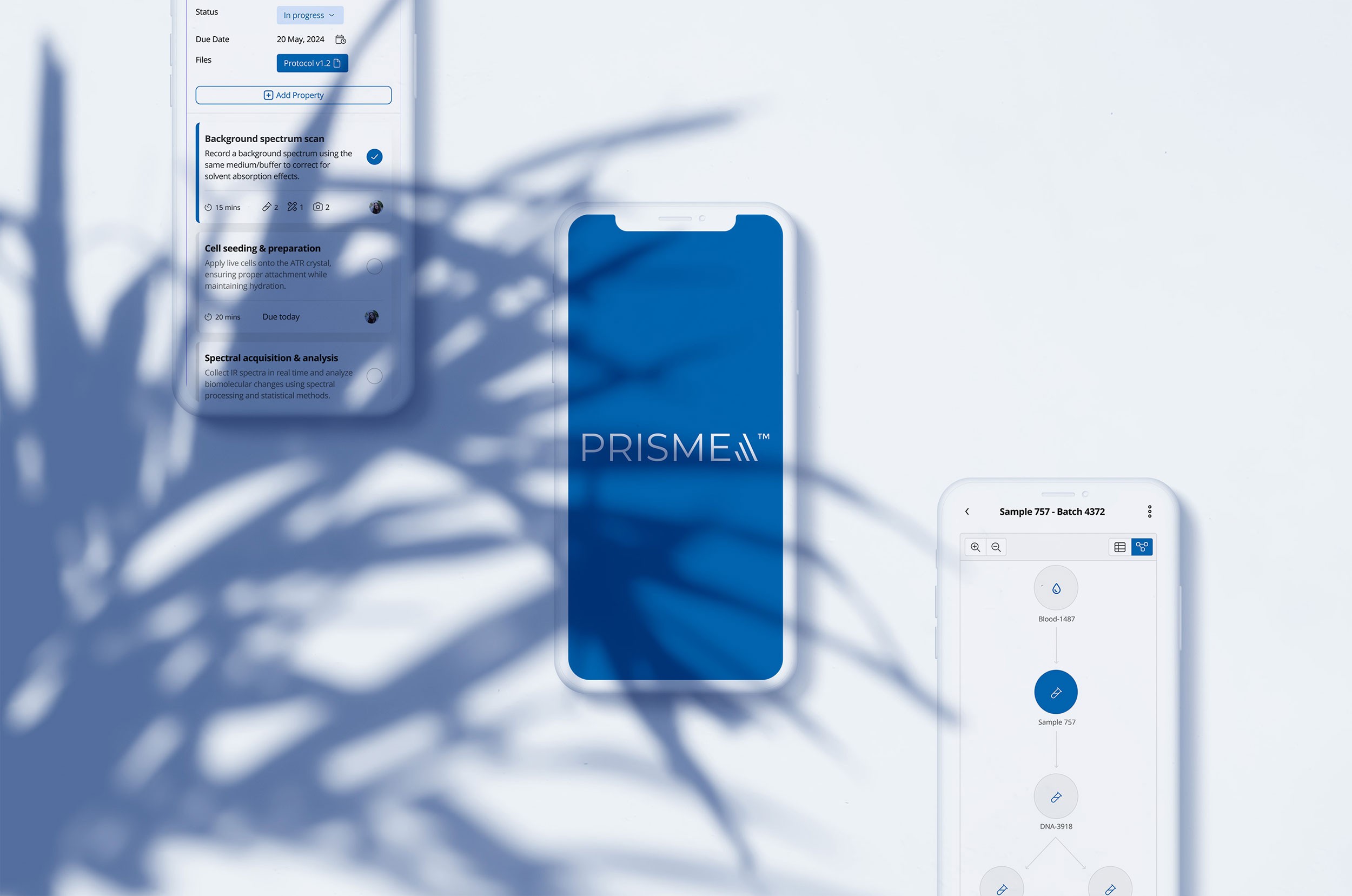
Prismea began with a product that had not yet found its centre of gravity.
A sample-management app had been developed, but the value was not landing clearly enough with prospective customers. The question was larger than interface design: what kind of laboratory problem was the product really solving, who needed it, and what would make it credible inside high-stakes research environments?
The work became a search for the product's real use conditions.
What had to become usable
Research laboratories are demanding environments. Efficiency matters. Compliance matters. Context matters.
The product had to support resource management, project work, sample visibility, workflow coordination, and regulatory confidence. It also had to work for different roles: practitioners, managers, and laboratory owners, each with different pressures and different definitions of value.
The work started by moving between market understanding, user research, workflow mapping, product strategy, and interface design. The aim was to find the shape of a product that could be understood quickly, adopted confidently, and used inside real laboratory routines.
Designing for extreme conditions
One question sharpened the whole project:
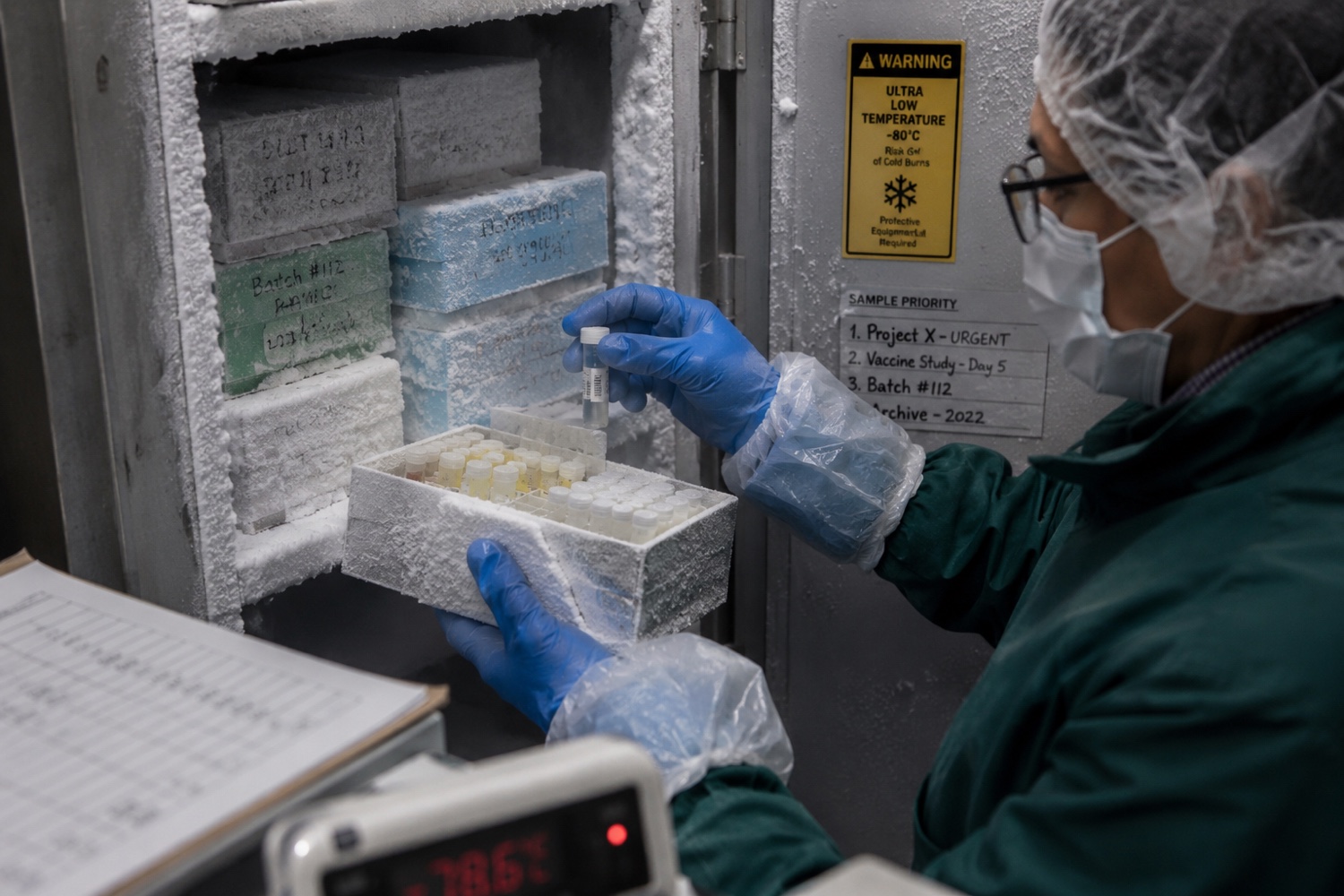
How would someone doing an inventory of a -40°C freezer conveniently use this product?
That question changed the work. It forced the interface to be judged against the physical reality of laboratory use: gloves, time pressure, cold environments, partial attention, and the need for the right information at the right moment.

The resulting principles were simple and demanding: signal over noise, contextual content, clear flows, and an interface that could support different roles without asking users to carry the complexity themselves.
What was designed
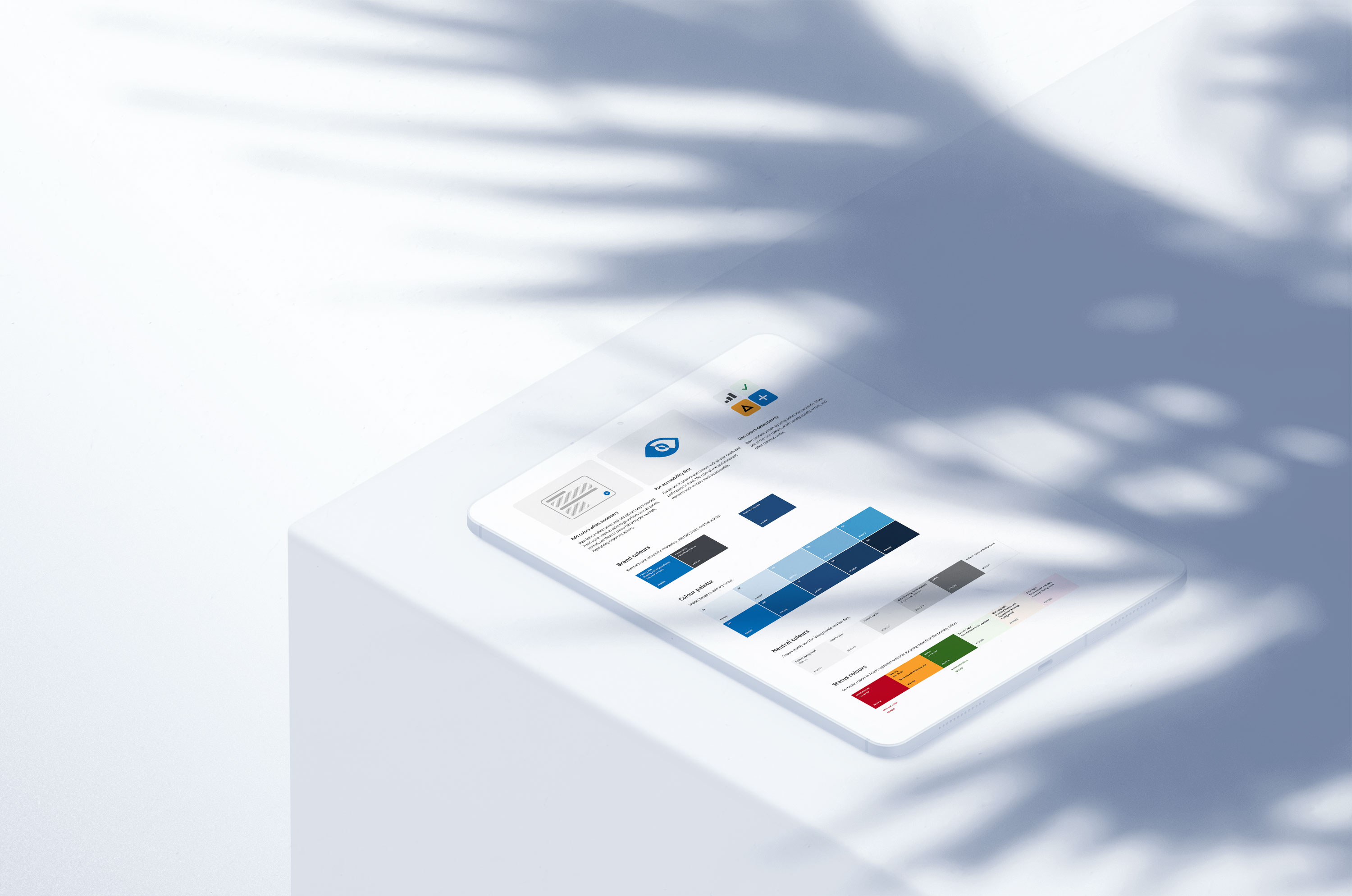
The project produced a clearer product strategy, a responsive web application, a Figma/Tailwind design system, and a tailored client onboarding programme. The design system helped a small engineering team move quickly while keeping the experience coherent.
The system was shaped around reuse, role-based clarity, and practical implementation. It had to give the team enough structure to build fast without trapping the product in premature complexity.
What held
The product's reception exceeded expectations, with increased adoption and recommendations from medical and health professionals. The work was described by the CEO as moving "from helping with vision, strategy, down to the pixels and our design system."
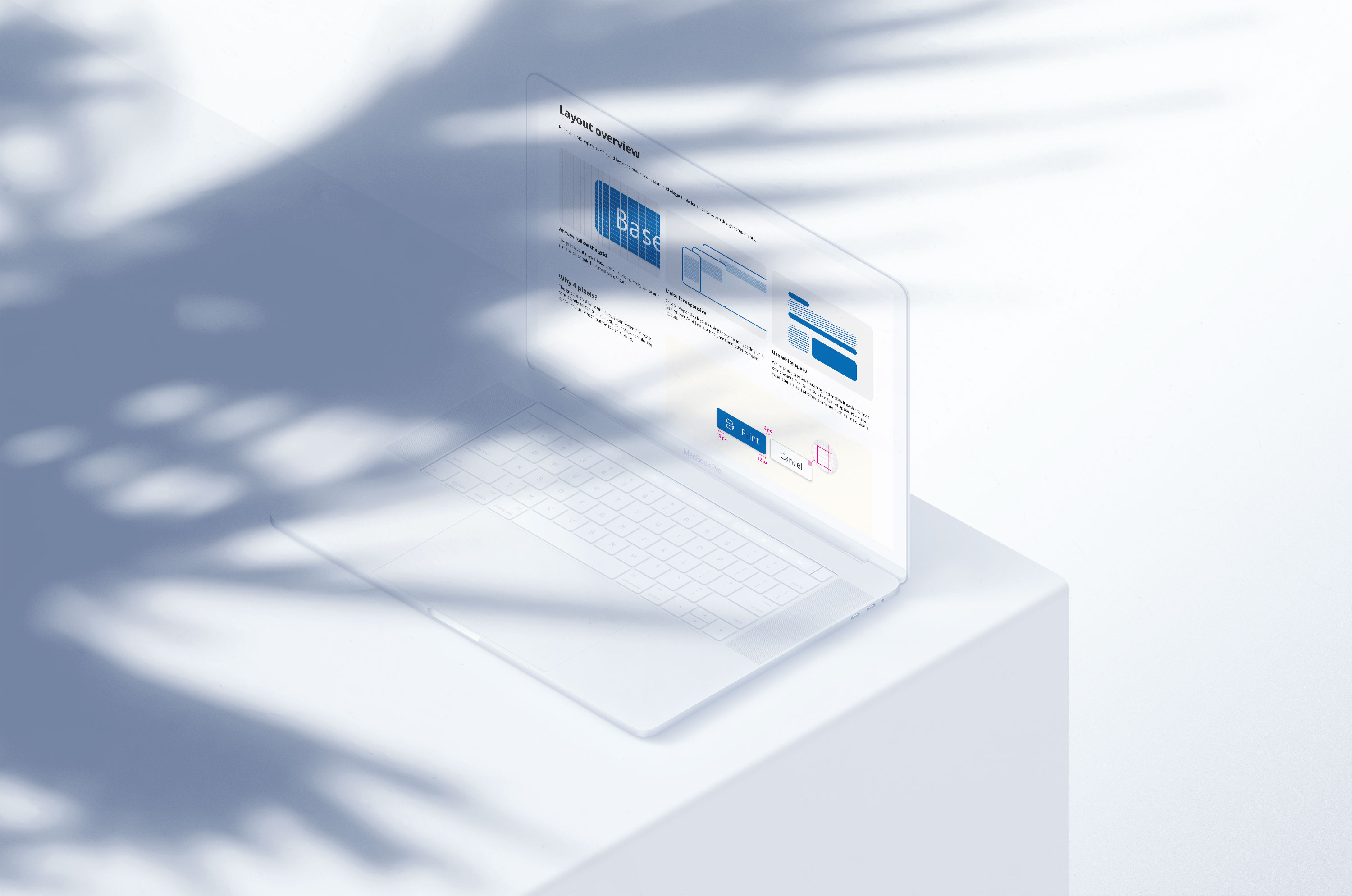
That range is the important part. The work held because product strategy, research, interface detail, design-system foundations, and team implementation were treated as one connected system.
What it taught
A product strategy becomes real when it survives the smallest interaction in the hardest conditions.