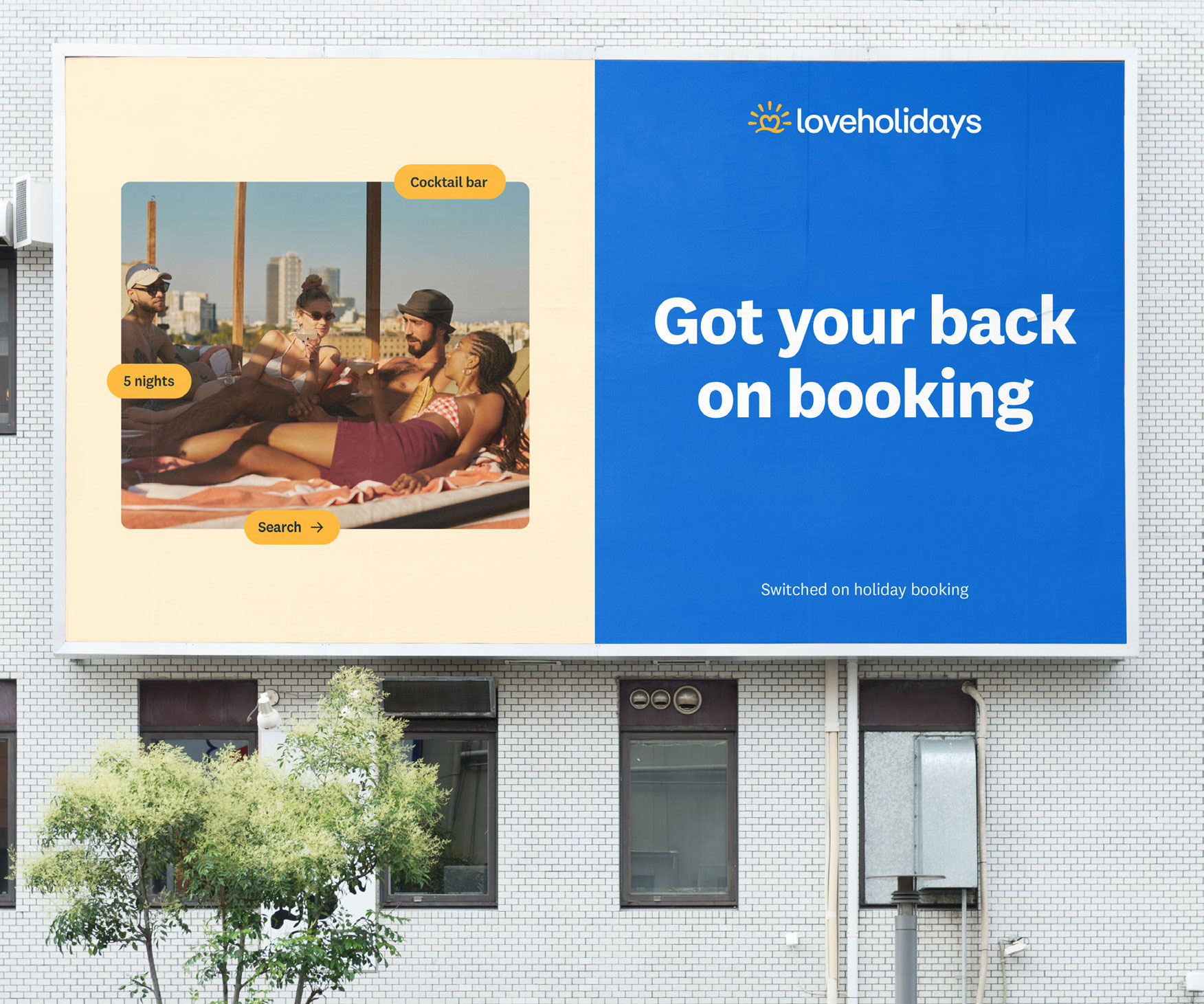
loveholidays was moving from underdog to market challenger.
The company had ambition, momentum, and a strong commercial proposition, but the brand needed to become easier to recognise, easier to use, and easier to carry across the organisation. Growth was no longer only a marketing challenge. It was a system challenge: how should the company express what made it different, how should that expression travel through product and communications, and how should teams use it to make decisions?
The work became a brand system, a product system, and an organisational alignment exercise at the same time.
What had to become clear
The first task was alignment.
The brand needed to clarify who loveholidays was, who it wanted to become, why it existed, and how that should be expressed across touchpoints. That meant working across the visible parts of the brand — identity, colour, iconography, illustration, photography, tone — and the less visible parts: proposition, differentiation, internal language, decision-making, and consistency across teams and partners.

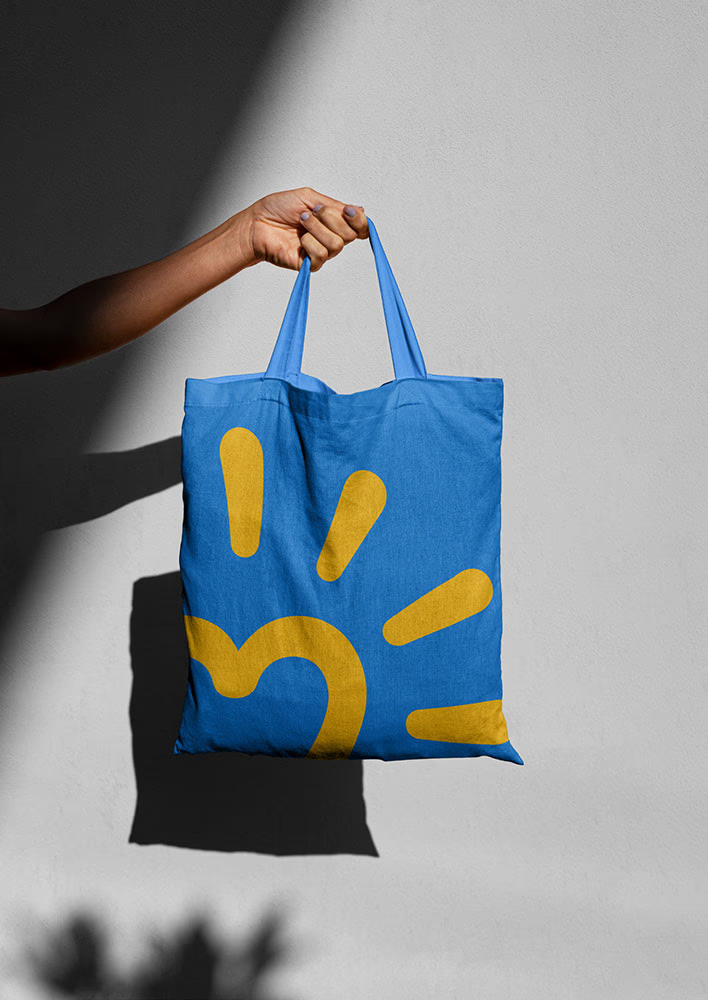
A brand system only becomes useful when people inside the organisation can use it without having to reinterpret it every time.
What was designed
The work moved from strategy into expression and then into use.
Vision, mission, positioning, proposition, visual identity, verbal identity, content guidance, and brand behaviours were redefined. The work also created the conditions for consistency across product, marketing, partner communications, and internal teams.

The aim was a brand that could be recognised by customers and operated by the organisation. That meant building more than a set of assets. It meant creating a shared language for how loveholidays should show up: confident, useful, warm, direct, and recognisably itself.
What had to hold
A brand refresh can create attention. A brand system has to survive repeated use.
The work needed to hold across campaigns, app flows, booking moments, partner communications, and internal decision-making. It had to give marketing teams enough range, product teams enough clarity, and leadership enough alignment to support a larger market position.
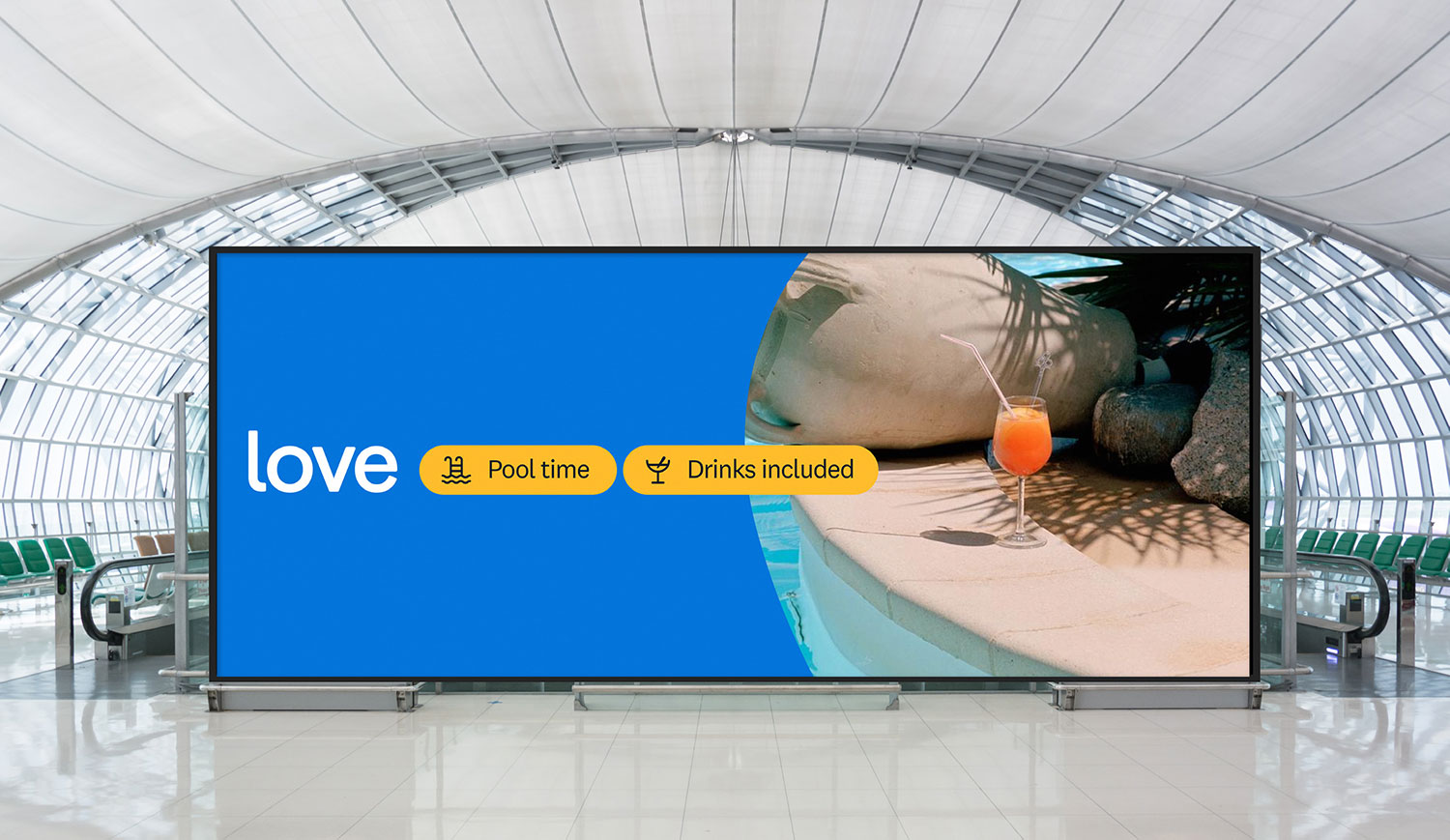
The strongest design work here was not any single surface. It was the connective tissue between proposition, expression, product behaviour, and organisational use.
What changed
The project became the first part of a longer design and research journey at loveholidays. It connected to new market launches, being voted "Nation's Favourite: Most Loved Holiday Company," a 4.9 App Store rating, and the development of a mature design system and localisation strategy.
The important lesson was that brand becomes most powerful when it stops being only an expression and becomes an operating system: a way for an organisation to make clearer choices, create more consistent experiences, and grow without losing coherence.
What it taught
A brand becomes useful when it turns identity into organisational judgement: what to say, what to build, what to repeat, and what to refuse.